What AI Looks like in Recruiting, Do’s and Don’ts
Let’s address the robot in the room.
AI is everywhere. It’s writing emails, summarizing meetings, generating job descriptions, creating interview questions, and, if the headlines are to be believed, plotting to replace us all before lunch.
So, it’s understandable that people have mixed feelings about it.
Some recruiters love it because it can save them hours of work every week. Others are wary because recruitment is, at its heart, about people, and people don’t fit neatly into algorithms.
The truth? AI isn’t the hero or the villain. It’s a tool. Like any tool, it’s incredibly useful when you know how and when to use it… and potentially disastrous when you don’t.
Think of it this way: AI is an excellent assistant, but a terrible hiring manager.
It can help you work faster, stay organized and remove some repetitive administrative tasks that come with recruitment. What it can’t do is replace human judgement, intuition, or the ability to build genuine relationships with candidates.
So, if you’re wondering whether AI belongs in your recruitment process. The answer is probably yes, but not in the way you might think.
Here’s what AI actually looks like in recruitment. Continue reading to see where AI can genuinely help, and where its’s better to let humans take the lead.
What AI Is Good At
AI is brilliant at taking care of the repetitive tasks that nobody particularly enjoys.
Think about everything that fills your day but doesn’t necessarily require your expertise:
- Drafting job adverts
- Creating interview questions
- Summarizing candidate notes
- Writing emails
- Organizing information
- Brainstorming employer branding ideas
- Creating social media content for vacancies
Instead of staring at a blank page wondering how to make “We’re looking for a dynamic team player…” sound different for the hundredth time, AI can give you a solid first draft in seconds.
Notice the phrase first draft.
That’s important.
AI is fantastic at getting you started. It’s much less reliable at getting you to the finish line without human input.
What AI Isn’t Good At
Here’s where things can go sideways.
AI doesn’t know your company culture.
It doesn’t know why your best employee succeeded while someone with an almost identical CV didn’t.
It can’t read between the lines during an interview or spot the moment a candidate lights up when talking about a particular project or experience.
And despite its confidence, it can also be spectacularly wrong.
(If you’ve ever asked AI a question and received an answer delivered with the confidence of someone who’s absolutely certain… and absolutely incorrect… you’ll know exactly what I mean.)
Recruitment isn’t just about matching keywords to job descriptions. It’s about judgement, relationships, intuition and trust. AI simply can’t replace those human skills.
It can analyze information.
But it can’t build trust.
It can generate words.
But it can’t genuinely understand people.
The Biggest Mistake? Letting AI Recruit For You.
This is where many people become understandably uncomfortable.
No candidate wants to feel like they’ve been assessed by a machine before a human has even looked at their application.
Likewise, recruiters shouldn’t rely solely on AI to screen CVs, make hiring decisions or communicate with candidates without reviewing the output.
People can tell when they’ve received a generic AI-generated message.
You know the ones.
“Thank you for your interest. Your unique skills and impressive background have been carefully considered…”
Translation: nobody actually read this.
Recruitment is personal. It always should be.
AI should support your decisions, not make them for you.
So, How Should You Use AI?
Think of AI as your incredibly fast assistant rather than your replacement.
Use it to save time on administration so you can spend more time doing the things that actually require you.
Take another look at the list above. Chances are there are a few tasks you’re spending far too much time on that AI could help you tackle more efficiently.
Whether it’s creating job adverts, drafting interview questions, summarizing meeting notes, brainstorming ideas or writing the first draft of a candidate email. AI can give you a head start, not the finished product.
In other words:
AI handles the busy work.
You handle the people.
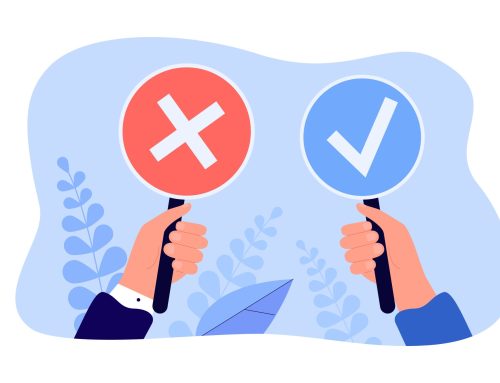
The Do’s and Don’ts of AI in Recruitment
Do:
- Use AI to speed up repetitive tasks.
- Review and fact-check everything it produces.
- Keep candidate communication authentic and personal.
- Protect confidential and personal information.
- Stay curious and keep learning about new AI tools.
- Use the time AI saves to build stronger relationships with candidates and hiring managers.
Don’t:
- Copy and paste everything AI gives you.
- Let AI make hiring decisions on its own.
- Assume it’s always 100% accurate.
- Forget that bias can exist in AI systems as well as humans.
- Lose the human connection that makes great recruitment possible.
What About the People Who Don’t Like AI?
That’s a completely fair position.
There are valid concerns around privacy, bias, transparency and over-reliance on technology. Those conversations matter, and recruiters should take them seriously.
Using AI responsibly means understanding its limitations, being transparent where appropriate, protecting candidate data, and ensuring humans remain accountable for hiring decisions.
AI shouldn’t remove humanity from recruitment.
If anything, it should create more space for it.
Because when you’re spending less time writing the fifteenth version of the same interview invitation, you have more time to actually speak with candidates, coach hiring managers, and build meaningful relationships.
And that’s still the part of recruitment that matters most.
Final Thoughts
AI isn’t coming to steal your recruitment job.
But recruiters who learn how to use AI effectively may have an advantage over those who ignore it completely.
The goal isn’t to choose between AI and human judgment. It’s to use each where they add the most value.
Use AI to make your work more efficient. Not less personal.
Let it handle the repetitive tasks, the brainstorming and the admin that you don’t want to do. Keep the conversations, the judgement, the empathy and the decision-making firmly in human hands.
After all, recruitment has always been about people.
AI can help you find them.
It can help you communicate with them.
It can even help you stay organized.
But it should never replace the human judgement, empathy and trust that great hiring decisions are built on.
Because people don’t join companies.

Author: Helina Patience, Founder, CPA, CMA, BA (Hons), BEd
Helina is a CPA, CMA with over fifteen years of experience in finance & HR within multinational companies, across many industries. Also the CEO of entreflow consulting group where I help small to medium-sized businesses get organized, grow, and crush their goals. I hold vast global experience after living and working in Australia, India, the UK and Ireland. Connect on LinkedIn.